Tuesday, April 30, 2019

In the Convent of Little Flowers

In the Convent of Little FlowersIn the Convent of Little Flowers
  - Indu Sundaresan

My rating: 2 of 5 stars

I just loved the first two books of the Taj trilogy. I didn't get around to reading the third, because it is in some sense not the continuation of the first two books, and I had quite enough of Mughal history at that time, and then just never got back to it. I also liked her story-telling in 'The Mountain of Fire', even though the book didn’t work as a whole. So, when I first came across her collection of stories - In the Convent of Little Flowers - with a beautiful cover, an intriguing title and interesting blurb, it promptly went on my TBR. So it is that I had been wanting to read it for a long time, and had very high expectations from it. But it wasn’t available in India, and the import fee jacked up the price so high that I didn’t feel justified in ordering it when I had a lot of other interesting stuff to read.

Well, I am just glad that I didn’t spend all that money on it. It took me a long time to finish, almost giving me a reader’s block. Apart from the fact that in last few months I have been spending most of my spare time in my other passion (namely, art), I read only one book at a time, and very rarely abandon one in the middle. I wanted to finish it, and yet couldn’t summon enough enthusiasm to finish.

The book just didn't work for me. Apart from the fact that the tone of all the stories is melancholy and depressing (even when there is a slight gleam of hope), I didn't really find a fresh perspective in most of the stories. For example, two of the stories deal with children’s’ mistreatment of elderly parents, and subjecting them to not just neglect, but criminal abuse. Now, how many stories and movies on this theme have you come across? Same is the case with the stories about unwed mothers or a purported NRI duping a girl’s family for dowry; even the one about wife-swapping is nothing new. Having grown up in small-town India in the 70s and 80s, and having read hindi literature (and translations of other regional works) and hindi magazines of that era, most of the themes were very familiar, and at least I did not find any new insights into the situations either. Overall, a big disappointment from the work of an author whose earlier works I admired. I would have rated it at one star for the content, I added one for the wonderful imagery of the setting she has painted in many of the stories.

Works such as these by NRI authors, sometimes make me wonder about their target audience. Are they trying to tell a story with universal appeal? Or are they targeting Indian diaspora overseas to make them feel nostalgic (if so, I don’t think it works very well, as for me, the feeling it most invoked was of negativity). Or are they targeting the western population, who commonly perceive India as an exotic and yet backward country, and reaffirming their belief by perpetuating the stereotyped ideas?

Thursday, January 17, 2019

Dead Poets Society

Dead Poets SocietyDead Poets Society
  - N.H. Kleinbaum
My rating: 3 of 5 stars

I love reading books about books or reading. Though this one was more about poetry, I felt this would be right up my alley as I like to read poetry too (but more of Hindi/Urdu rather than English). However, as it turns out, I must be one of the rare few who did not find this an exceptional story.

The premise is simple – in the strictly goal-oriented system of a residential school, students feel stifled, as their teacher and parents push them to ‘achieve’ what they consider as success. To this rigid, suffocating system, the new English professor, John Keating, brings a radical way of thinking. It is a welcome change for students (or at least some of them), though not everyone views it in a positive light. As the students discover the beauty of language and poetry, they also find a brief interlude where they can dare to dream.

I loved the character of Keating, and the way he enables the students to enjoy and appreciate the beauty of literature. I could also identify with the plight of students, as children having to bear the burden of parents’ expectations is something very relatable in our cultural context. Parents and school management have been stereotyped, though that is essential to the storyline. I liked some of the quoted poetry quite a bit, especially the lines composed by the character of Todd (which I assume, would be the author’s own creation).

Yet, it did not work for me as well as I had anticipated. The plot was quite simple, to the point of being predictable. A good narration could have made up for it, but the storytelling was quite average as well. I felt it skimmed on the surface, and only a couple of characters were developed well enough to engage the reader. The biggest downside was the romantic subplot, which I feel does nothing but glorify stalking.

Of late, I haven’t been able to enjoy several books as much as I hope to, and I am not quite able to put a finger on the reason for this. It may be that the level of expectation is too high, buoyed by the glowing recommendations I see for the book. Or the fact that I still am not able to really enjoy reading on Kindle. Or the book genuinely didn’t appeal to me. I definitely expected to feel more deeply about this one. Altogether, a quick, easy read, I would rate somewhere between 2.5 and 3.

Monday, December 17, 2018

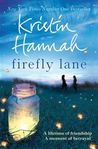
Firefly Lane

Firefly Lane (Firefly Lane, #1)Firefly Lane 
  - Kristin Hannah

My rating: 3 of 5 stars

I picked Firefly Lane by Kristin Hannah after seeing a number of recommendations for this book, and 'The Nightingale', also written by her, on the SRR group and on Goodreads. It is the kind of book that I love – it takes us on a journey with two girls, who strike an unlikely friendship in their childhood, and stay best friends through the decades and various stages of their lives, and through all the ups and downs of the life and friendship. One thing I would say about it is – it’s very well written and I couldn’t put it down, due to or despite the feeling it evoked in me.

It started wonderfully well, when Tully and Kate meet each other at the tender and turbulent age of 14 – as different in their personalities and family background, as they could be. The only thing that they have in common is their feeling of isolation. It portrays the desperation of the two girls in a beautiful manner, that is almost heart-breaking. I also loved the way it captures their relationship with their respective mothers, and the impact it has on their outlook and life, more so in case of Tully.

However, as the book progressed, I kept getting more and more annoyed by the story, as well as the narration. In the beginning, the details of Tully's appearance were relevant, as they highlighted the difference between her and Kate. But when she is becoming or, has become, a smashing success, and the author insists on giving us details of her designer dresses and fancy cars every single time she makes an appearance, it gets irritating and irrelevant. Over the time, the author has both the lead characters settled into stereotypes - Tully is a star, an achiever, while Kate is overwhelmed by her domestic duties (which, incidentally, she brings upon herself by volunteering for every single event that happens at kids’ school and her social circle). By the 3/4th mark, they became so one-dimensional that I couldn’t like either of them much any longer. At this point I was almost on the verge of abandoning it - the book is too big (almost 480 pages) – for the story. It would have been better to avoid the pointless, repeated descriptions of Tully’s dresses and parties and even success stories, and make the book leaner without losing on the story.

But my biggest peeve is the way it undermines women, and in the very clichéd manner. Through her characters, the author keeps stating that in this age, women can have everything they want, be whoever they want to be. But, with her story, she just goes on to emphasize the opposite - women can't really have everything. Tully, the ambitious one, sacrificed love for her career, and in the middle age, starts feeling lonely and regrets her choices. Kate, whose ideal was domestic bliss, is tired and depressed, and regrets not having an identity of her own. Both suffer a feeling of loss, and of course, each is somewhat jealous of the other (though that doesn’t affect their love for each other).

Towards the end, it redeemed itself, by showing Kate’s troubled relationship with her teenage daughter, and demonstrating the way life comes a full circle. This part of the story, was rather predictable, but it was so heart-wrenching that I couldn’t dislike it. I cried through the last few chapters (glad I was alone at home at the time :D), and it left me exhausted.

All through the book, I couldn’t help comparing it to Beaches (by Iris Rainer Dart), and not just because of the theme of an enduring friendship between two girls. After finishing this, I strongly feel that the story line bears a lot of similarity, and I may go so far as to call it a more sophisticated or sanitized version of Beaches

Monday, December 03, 2018

Carthick's Unfairy Tales

Carthick's Unfairy TalesCarthick's Unfairy Tales 
  - T F Carthick

My rating: 4 of 5 stars

I first came to know about this book from SRR (the virtual reading group I am a member of), where it was lauded with rave reviews.

As the title indicates, this is a collection of stories – retellings of popular fairy tales, but with a different take. Some have a twist from the usual narrative, while others are told from a different PoV. One or two are in the lighter vein, and all of them are thought-provoking. The different perspectives that the author has presented are fascinating, and often make you think whether justice was really served in the popular versions we have grown up hearing (my take – ‘Unfairy’ could refer to the unfair world we live in, or the picture that has been painted for us all these years).

Another delightful thing about the book is the literary references and puns used throughout the stories, specifically the titles, e.g., the first story is titled ‘Of Mice and Horses’ (and it is a take on the story of Cinderella). The subtle humor and satire keeps one amused, even at the points of philosophical musings.

What could be improved, I think, is the style of language (for want of a better word). Sometimes the sentence structure reminds me of the style of O. Henry – formal and descriptive and witty, all at the same time. At others, the style is more crisp and contemporary. The switch was a bit disconcerting, and it may be smoother if a story follows a consistency in style (my personal preference is for the old world charm of O. Henry).

It is great to see young Indian authors coming up with such experiments, and with wonderful results. I feel that these are the kind of stories that will appeal to a very wide range of readers, beyond the barriers of age, gender or which part of the world you live in. I loved it, and recommend it highly, though I think young (pre-teen) readers will not be able to appreciate all the points the author has put forward.

Friday, November 02, 2018

Mini Reviews - VI

Another installment in the series of mini reviews :D

Cheaper by the dozen -  Frank B. Gilbreth Jr 
This is a collection of hilarious anecdotes that arise when a pair of efficiency expert parents have a dozen kids in the family. It also gives a glimpse into the life of a reasonably well-to-do family of the time, when being a successful entrepreneur did not mean mindless luxury and spoiled children, instead, having educated parents meant a focus on learning, and success meant instilling a respect for hard work in the next generation.

It was an absolute delight to get to know the charming, quirky and lovable Mr Gilbreth through the eyes of his children. Few days of my commute were spent silently chuckling over their adventures and misadventures, as I was reading it on my daily commute to work.

 
Sleeper and the Spindle - Neil Gaiman 
This is really just a story, it turned out to be much shorter than I expected. The book is beautifully designed, and the illustrations are simply gorgeous. However, the story itself didn't impress me that much. It is a different take on two conventional fairy tales, but it didn't go into any details to give a better insight into the characters. I was also not quite clear about what had changed after nearly hundred years to cause the sudden panic. I'd give it 3.5 stars, including some extra for the beautiful art.


Partisans - Alistair MacLean 
Not one of the best of MacLean, not even close. I used to love action/spy thrillers in early youth, and loved MacLean, and read many of them several times over. This was one of the 2 or 3 I had not yet read. It is possible that I could have outgrown them (though I really dont think so), or it is entirely possible that it just doesn't make the mark.

This is a very linear story, almost dull. The protagonist really faces no kind of challenge or conflict, that mark his most engaging works, where the hero needs to use his wits and strength to overcome impossible situations. The plot was kind of predictable, and the hero achieves his aim without much of a struggle.

For me, the only thing I loved about this book was the beautiful hardback I could buy from a used-book sale. I had never seen a hardback of the thrillers of this era, and this one has lovely thick pages and wonderful print (the kind of which we dont get to see anymore).

The Criminal Mastermind of Baker Street

The Criminal Mastermind of Baker StreetThe Criminal Mastermind of Baker Street 
 - Rob Nunn

My rating: 2 of 5 stars

I had somehow stumbled upon this book on Goodreads, perhaps while looking over some of the other Holmes pastiche works that I have been wanting to read. [Confession - Pastiche is a new word I learnt recently, and am having fun using it :D]. There was a preview available, and it aroused my curiosity and interest. This had been on my wishlist since then, but has always been hard to find, or quite expensive. A few months ago I got a kindle, and recently got a ebook of this one, allowing me to delve into it.

Sorry to say that, belying the GR reviews, and the promise offered by the preview, it did not live up to the expectation. I felt that it is essentially a retelling of the original (or canon, as they are fond of calling it in the pastiche universe), though in a less engaging manner. It hardly adds anything new, with the exception of a few minor twists here and there. The author keeps on telling us what a criminal-par-excellence Holmes is, achieving this daredevil heist or that complicated disappearance or what sweet revenge on his enemies; but how these were achieved, we have no clue. The employment of Sherlockian “methods” (you know my methods, Watson!), that was the USP of the canon, is deplorably missing. The only cases where we get to see some detail of the execution are the ones which are taken from the canon. It was also annoying to read Holmes, and to some extent Watson, continually refer to themselves as great criminals; I don’t think I have come across any work of fiction – book or movie – where even the vilest criminals do so. The author also brought in references to a number of things, for example, Jack the Ripper, around which there was no story, making me wonder about the purpose of doing so. There were also some inconsistencies or contradictions, which though a little jarring, could be overlooked; but it would have been better to avoid them altogether.

Wednesday, October 24, 2018

Calling Sehmat

Calling Sehmat A NovelCalling Sehmat
  - Harinder Sikka

My rating: 3 of 5 stars

This is one of the rare cases where the movie was better than the book. I had been meaning to read the book, but happened to watch the movie first. Then, I learnt that the book covers details that were not shown in the movie, and therefore decided to read the book.

I started reading with quite an interest, since the movie was so good, kept you on the edge, and I expected the book to be even better. However, I didn't find the writer to be a good storyteller at all, which is such a pity, because this was a great story, and a true one to boot. The writing style is very bland - he keeps on stating facts after facts, so that it feels more like a book report (and of a teenager, at that) rather than a book. Most of the narration comes across as painfully labored, and several places, especially the romance threads, are full of Bollywood-ish clichés. So, after about 40-50 pages, I ended up speed reading it, to get the story. The details of events, and characterization of people, that one would wish to see, is missing for most part. The only event that is accorded ample detail is the naval history of the ‘71 war, which is interesting to read, but is not really a part of Sehmat’s story.

I would give this one 2.5 stars, and that is only because of the story.

Minor Spoilers Ahead …

There seems to be a lot of inconsistencies in the way events take place. You would expect the top brass of ISI to have a great degree of cunning. It would be possible for her in-laws to be deceived by an innocent looking young girl, but it stretches the imagination to believe that this inexperienced and little trained girl could take over the running of their entire lives. It is also difficult to believe that top-secret military strategy discussions take place in intelligence officers’ homes, but it is inconceivable that the discussions would be held in the presence of not just family members, but even servants.

In this aspect, the movie was more convincing as Sehmat is not shown as the one calling all the shots everywhere. Further, the book portrays the husband almost as a dumb sidekick, while the movie lends him an endearing personality. In fact, the movie portrayed the whole Sayeed family in a very sympathetic manner, probably a little too much, so that you can’t dislike them as people.

Major Spoilers …..

The biggest conflict lies in her reaction to the lives she is compelled to take. She feels guilty after she runs over Abdul, but doesn’t give much thought after killing Mehmood, and is smiling that it was Munira who was killed in the blast instead of her. Yet, afterwards, the guilt draws her into a deep trauma. Further, it is Abdul’s murder that haunts her, who had never trusted her; rather than that of Mehmood, Munira, and presumably Iqbal – people who had trusted her and showered affection upon her.

Secret agents are just that – secret. They can’t be given a red carpet welcome in public, or even outside a very restricted circle – it would seriously jeopardize their lives, and surely that’s plain common sense?

Some unanswered questions …

How did General Sayeed come to know that the mole in their midst was Sehmat? The process of elimination? The links to the shopkeeper? The fingerprint evidence?
Who was the family member that Samar’s boss calls up? Perhaps it is indicated that it was Aby, but he can’t be the person whom no one knows about, because Samar himself was brought up by him.


Sunday, October 21, 2018

In the Company of Cheerful Ladies

In the Company of Cheerful Ladies (No. 1 Ladies' Detective Agency #06)In the Company of Cheerful Ladies 
  - Alexander McCall Smith

My rating: 4 of 5 stars

This is more of a review of the series in general, and only a little about this particular book.

After reading glowing recommendations of the series from several members of my online reading group, I checked out the story line to convince myself that this is really worth a read. That done, I bought some of the series, two at a time. I really liked the first two - there isn't much by way of crime detection, but it has a great human angle. However, after that it has been a roller-coaster kind of ride.

I found #3 quite repetitive, and also boring because there wasn't much of a story here. So I decided not to read further than the ones I already had. But when I read #4, I felt that the series had redeemed itself. And so, onto #5 and #6 (to save on delivery charges on a book I really wanted to read at that time), and before I had a chance to read them, bought #7 and #8 (at a used-book sale). #5 hit quite a low for me - not only had I had enough of the old Botwsana morality and Sir Sertse Khama, I was also disappointed that Mma Ramotswe did not give the right advice to her client.

Coming to the #6, I liked it much better than the previous one. For one, though there are references to the things that have been a constant through the series, they are subdued and not played up excessively. There is a positive movement in the lives of people involved, which cheers up the spirit. On the downside, the two lead characters - Ramotswe and Makutsi appear to be indulging in an increasing sense of self-worth (the former for her virtues, the latter for her smartness), and becoming more and more judgemental in the process. At this stage, one even wonders whether their partnership will last, but it obviously does, because there are 19 books out there.

Spoilers ...

There is also an unexplained thread - the intruder in Mma Ramotswe's home and the pumpkin left outside her house - I am still perplexed what it was all about. I wish it would be explained in one of the subsequent books, but I do not hold much hope because of the way the books are written. The business of Mr Maketoni's house is also only half addressed - while Charlie is taken care of, who would want their house to be misused?

As one of my GR friend says, this series is running out of stream. The preaching about traditional values have run their course, and pace of story is erratic at best. As of now, I don't plan to read after the book 8, but you never know. As a matter of curiosity, I looked at the stats of the series on GR - number of ratings, and rating. The number of people who have continued to follow the series is consistently declining (it makes an interesting graph), while the rating is more or less increasing. Perhaps the ones who are sticking to it are die-hard fans :).

Wednesday, September 12, 2018

The Princess Bride

The Princess BrideThe Princess Bride 
  - William Goldman

My rating: 3 of 5 stars

I started with a rating of 4 stars, but eventually settled for 3. I had read such glorious praises of this book that had set my expectations really high. I waited to read this for a long time, but the price of the book never went down. Finally, having acquired a kindle recently, I settled for the ebook, which though still relatively higher priced, was about half the price of the paperback.

I must say that it was non-stop good fun – very entertaining with all the usual tropes of a fairy tale, but related in a very witty manner. In fact, I think it is his sharp wit, that keeps a reader more than amused, and makes it worth reading. His usage of the story-within-a-story device is a novel concept (at least to me) – he presents this book to the reader as an abridged version of a very well-known classic, which no-one bothers to read now (for good reason, which the author keeps indicating in asides). However, after a while, I grew bored of his (tall?) tales of his dealings with the publisher and the movie producers – something like too much of a good thing. He has sketched his characters in a completely stereotypical manner, quite intentionally, I think. Yet, I loved them all – the good and the evil – with the exception of the princess. Call it a feminist rant, but the damsel-in-distress with little intelligence and spunk couldn’t win me over, even if she was the most beautiful woman in the world.

Inkredia - Luwan of Brida

Inkredia - Luwan of BridaInkredia - Luwan of Brida
  - Sarang Mahajan

My rating: 3 of 5 stars

Note: I was offered a copy by the publisher in exchange of an honest review

I must confess that when the publisher approached me to review the book (through Goodreads), I was a bit excited, even though I could see that they had approached a number of people and I was in no way special. Yet, I first checked out what it was about (nope, not even the offer of a free book is enough to commit to the time and effort required for reading and reviewing). It seemed quite interesting – a thrilling journey set in a fantasy world. Moreover, it is heartening to see Indian writers venturing into different genres, and it looked like the kind of story that can elicit a wider response beyond Indian readers.

Once I started reading it, I finished it in a few hours (thanks to a mid-week holiday with no other demands on my time). It is an entertaining fantasy tale, complete with sorcerers and fantastic creatures, magic, talismans, and an unknowing, simple-minded person thrown into the midst of a dark and dangerous quest.

My usual style of “review” does not give a synopsis of the story, I feel any interested person can gather it from the book blurb, and if not, there are several other reviews that summarize the plot. I tend to write more about what thoughts I had in mind while reading the book, and what were the things that interested me or frustrated me. Once in a while, I do add a brief summary, to help a reader make sense of what I am going to say.

Inkredia is a vast, powerful empire, and the protagonist, Luwan, is a 17-year old boy, living in its remote mountain village called Brida. It is an inhospitable land, ruled by a cruel, tyrant lord named Gruwak. Luwan’s parents are dead, and his only family now is his elder sister Meg. On her deathbed, his mother gave him two heirlooms – a red book, and a black pendant with a silver spiral. Unable to pay the tax demanded by Gruwak, Luwan rebels, and then, fearing for their lives, he and his sister flee the village, taking nothing but his heirlooms and the little money Meg has saved. There is more to it, of course, than meets the eye, and soon he is embroiled deep into mysteries that he has no time to give thought to – chased by powerful and merciless Ghork Riders, he is too busy fighting for his life.

The story appears to have drawn some inspiration from other classic fantasy books. Lord of the Rings inspiration is indicated by the similarity in the way places are named, and the lead characters are addressed. Ghork riders specifically bear a resemblance to the Nazgul, and “nashques” to “the rings”. Though this is not necessarily a negative, and not just for the fact that LOTR is not everyone’s cup of tea. The Red Book is somewhat reminiscent of Tom Riddle’s diary, and coming face to face with legendary characters only heard in childhood stories reminds me of Tales of Beedle the Bard. Yet, Inkredia has its own flavor, it creates a world of its own, and a fast paced, engaging narrative. The flow is smooth, and in spite of the inspiration, the build-up is imaginative. It sets up the stage for subsequent books nicely, creating an interest with mysteries laid out and a premonition of evil looming ahead.

I think it can be quite appealing to middle graders, who are ready for a thrilling, if gory, adventure, but not mature enough for a highly complex universe like LOTR. For a relatively mature reader, it can be a light, enjoyable read, but not with the same kind of appeal. The style is simplistic, at times with redundant statements. I would consider it a YA fantasy, but even so, it can be made crisper. A discerning reader would find that the author “tells” us things, rather than “show”. Consider this – “Klaurus took a fistful of bone dust from his pocket and sprinkled it into the goblet, then sang a long and dark incantation”. If it was LOTR, for example, instead of “sang a long and dark incantation”, we would actually have a page or so of a song with a dark foreboding, not fully understandable in high likelihood. It also appears that the author has written with a screen adaptation in mind – on one page I counted three “fade-out” scenes :D

One great shortcoming, I felt, was that for the kind of fantasy that this is (or aims to be), the main protagonist(s) are weak character(s), showing little initiative of their own. In the early stages, they need to depend on their friend Narjo, and thereafter, they almost entirely bank on Kiliarn’s skills. While Luwan demonstrates bravery at several points, his sister Meg shows very few strengths. She is a typical damsel-in-distress for most part, and her cowardice puts others at grave risk. However, this is only the first part of the series, and I hope that the characters will evolve in the sequels.

Some things left me baffled – The Red Book had considerable significance in the first half, even though its manifestation was very simplistic (the riddles didn’t really seem puzzling). However, it didn’t have any mention in the second half. The dream that Luwan has, in the beginning of the story, is not explained (at least not yet), and it’s not clear whether the event actually took place in an alternative universe, or whether it was a foreboding. The latter may be addressed in later books, but the former can’t be undone.

Ideally, I shouldn’t have had to mention it, but I am glad to say that this is very well edited compared to other debut works by Indian authors I have come across. All in all, a promising start, and I do hope that the plot and style will evolve along the series.